
Views: 0 Author: Site Editor Publish Time: 2026-09-16 Origin: Site


Procuring reliable propellant remains a high-stakes decision for any growing brand. This choice directly impacts your brand reputation. It also dictates hardware longevity and overall return rates. A single bad batch can trigger massive financial losses. Subpar gas formulations routinely cause severe valve freezing. They severely degrade internal weapon seals. These bad formulations also deliver highly inconsistent FPS (Feet Per Second) metrics. Field performance failures will instantly alienate your players. This quickly leads to irreversible customer churn. You simply cannot afford to gamble on unknown propellant sources. This guide provides a transparent, evidence-based framework for evaluating an airsoft green gas supplier. We will compare different manufacturing models step by step. We will also highlight critical safety metrics you must track. You will learn exactly how to mitigate major supply chain risks. Read on to master your procurement strategy.
Choosing between OEM and private label models depends primarily on target margins, desired formulation control, and speed-to-market.
True supplier quality is measured by verifiable batch-testing for consistent pressure and precise silicone oil ratios, not just price-per-unit.
Regulatory compliance (DOT/CE) and hazmat logistics capability are non-negotiable criteria for continuous supply chain operation.
Canister integrity and valve design are critical failure points that must be audited prior to large-scale procurement.
Propellant performance builds customer loyalty in a skeptical B2C market. Players talk rapidly on forums and social media. If a canister leaks, players blame your brand. If the gas lacks power, they leave negative reviews. Consistent propellant performance is your strongest marketing tool. Building brand equity requires a steady green gas supply. It builds deep trust among serious players. Customers will happily pay a premium for reliable gas. You must view propellant as an extension of your brand identity. Unreliable gas destroys brand equity almost overnight.
Gas purity directly impacts hardware lifespan. The correlation between lubricant mixing and seal longevity is absolute. Gas Blowback (GBB) internal seals require precise lubrication. Too much oil clogs hop-up buckings. This ruins projectile accuracy immediately. Too little oil dries out vital rubber O-rings. Dry O-rings lead to catastrophic magazine leaks. A capable supplier perfectly balances propane purity and silicone mixtures. They understand how different temperatures affect internal pressure. They also formulate mixtures to protect delicate hardware components.
Hidden costs quickly destroy your profit margins. Leaking canisters ruin entire shipping pallets. They also create extreme warehouse hazards. Hazmat shipping violations trigger massive regulatory fines. Customs officials will seize non-compliant cargo immediately. Recalled batches damage retail relationships permanently. Retailers will drop brands that cause safety headaches. You must calculate these hidden costs carefully. Do not solely focus on the initial price-per-unit. A cheap supplier often costs you much more eventually. Always prioritize safety and logistical compliance.
Ignoring long-term hardware degradation caused by dirty gas.
Failing to calculate the cost of replacing damaged customer magazines.
Choosing a supplier based purely on the lowest wholesale price.
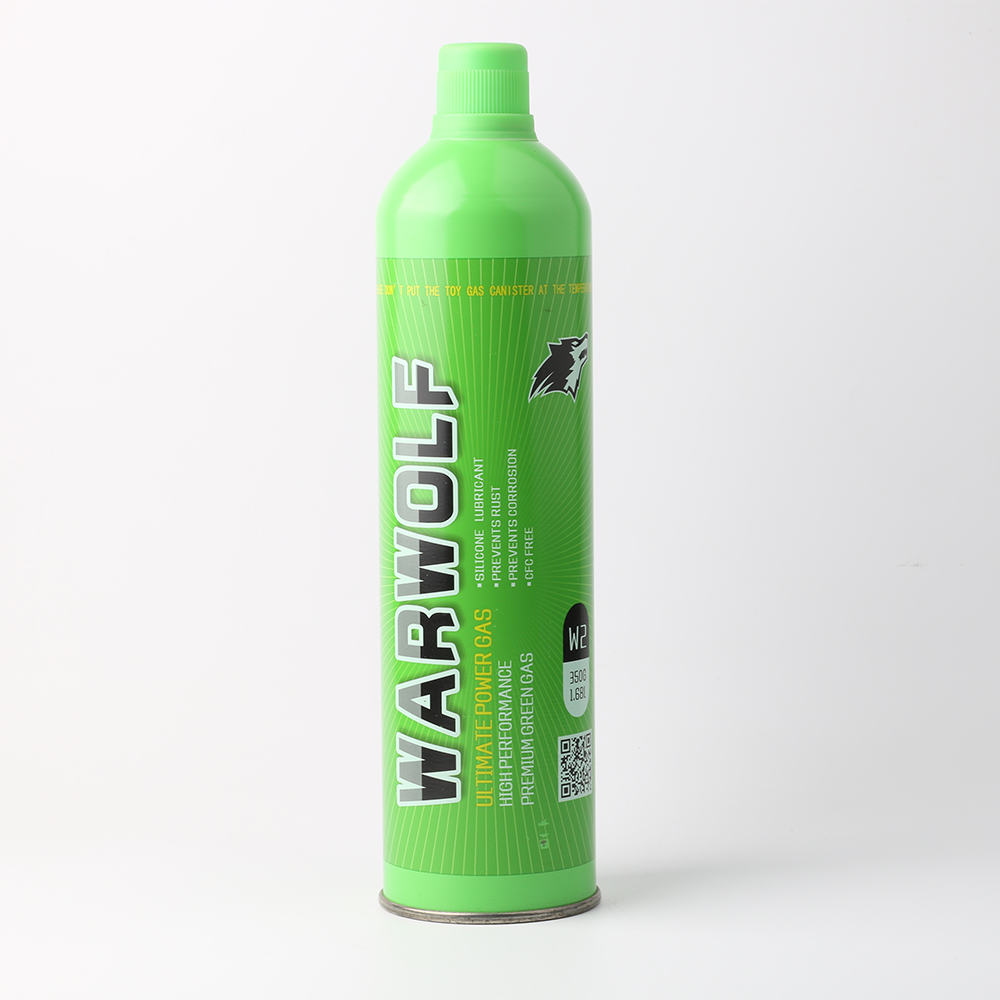
This model involves purchasing pre-formulated gas. You buy manufacturer-branded or generic white-label cans. Utilizing an OEM green gas model offers clear advantages. It provides much lower Minimum Order Quantities (MOQs). You gain immediate product availability. You also benefit from proven chemical stability. However, this approach carries distinct disadvantages. You achieve zero competitive differentiation on the formulation. You end up competing directly on retail price alone. It limits your long-term brand building potential. This path suits new brands testing market demand.
Private labeling applies custom branding to standardized formulations. Sometimes suppliers tweak the standard mixtures slightly. Sourcing private label airsoft gas grants you brand ownership. You command total margin control. You can explicitly market specific PSI ratings. You can also advertise unique lubricant blends. The downsides include higher initial MOQs. You will face longer lead times for packaging approvals. However, it builds substantial brand loyalty. Players will specifically seek out your unique can design.
Original Design Manufacturing involves creating entirely new blends. You might require a high-pressure winter gas. You might need a low-pressure CQB variant. Developing custom airsoft gas perfectly suits extreme weather markets. You can also offer specific dry or heavily lubricated variants. This approach targets highly competitive milsim players. It demands intense supplier collaboration. It also requires rigorous field testing. Only mature brands usually attempt this route.
Table 1: Sourcing Model Comparison
Model Type | Speed to Market | Margin Potential | Formulation Control | Typical MOQ |
|---|---|---|---|---|
OEM / White Label | Very Fast (1-2 weeks) | Low to Medium | None | Low |
Private Label | Medium (4-8 weeks) | High | Limited | Medium |
Custom / ODM | Slow (3-6 months) | Very High | Complete | High |
Pressure stability dictates shooting performance. You must demand strict documentation from any green gas manufacturer. Require comprehensive temperature-to-PSI stability testing logs. Gas pressure naturally fluctuates wildly across temperatures. You must assess how they source their raw materials. Determine how they account for propane purity levels. They must minimize volumetric variance per batch. Producing consistent green gas pressure requires advanced filling machinery. Ask to see their automated pressure check protocols. Quality suppliers discard over-pressurized cans immediately. Consistency prevents dangerous hardware malfunctions on the field.
Lubricant integration determines hardware health. You must strictly evaluate their blending process. Ask how they prevent silicone oil from settling. The mixture must ensure perfect atomization upon firing. Atomized oil perfectly coats the internal seals. Review their standard mixing ratios carefully. Industry standard usually sits around 1.8% to 2% silicone. Some competitive players strictly demand "dry" gas. Evaluate their capability to produce oil-free propellant variants. Poorly mixed gas spits liquid oil out the barrel. This ruins accuracy and fouls the inner barrel quickly.
Canister integrity acts as your primary safety net. You must analyze the ongoing nozzle material debate. Metal nozzles offer durability but can damage magazine fill valves. Polymer nozzles protect the magazine but break easier. Base this choice on your specific customer hardware. Require extensive burst-pressure test data. Request bottom-seal integrity metrics. Weak bottom seals lead to warehouse inventory leakage. Defective fill valves cause gas to spray everywhere. These engineering details prevent dangerous accidents and negative reviews.
Request five consecutive batch testing logs.
Verify the specific grade of silicone oil used.
Ask for destructive burst testing video evidence.
Check the fill nozzle dimensions against standard magazines.
Your canister is your biggest billboard. Proper green gas canister customization elevates brand perception. Assess their lithographic printing quality thoroughly. Cheap stickers peel off during humid outdoor games. Insist on high-quality rust-resistant exterior coatings. Rust weakens the pressurized vessel over time. Legal warning placements require careful attention. Warning labels must meet strict regional formatting rules. Ask for previous printing samples to check color accuracy. Blurry logos make your brand look unprofessional.
Pressure vessels carry severe legal regulations. You must ensure they meet regional pressure vessel standards. The US market strictly requires DOT (Department of Transportation) compliance. The European market demands CE and ADR certifications. Never import uncertified pressurized cans. Customs agents will intercept and destroy illegal shipments. You will bear the total financial loss. Request current copies of all facility and product certifications. Verify these documents independently with regulatory bodies.
Logistics can break your supply chain entirely. Evaluate their track record with Hazmat cargo. They must understand international maritime dangerous goods (IMDG) packing. Proper customs clearance documentation is absolutely vital. Shipping pressurized flammable gas requires specialized freight forwarders. A competent supplier handles these logistics smoothly. They provide accurate Safety Data Sheets (SDS) quickly. They also secure the proper container ventilation requirements. Delays in Hazmat clearance cost you critical peak-season sales.
Always keep updated SDS sheets on your website.
Hire a specialized Hazmat customs broker.
Regularly audit the rust-resistant coating on stored inventory.
Never place bulk orders blindly. You must establish rigorous sample testing protocols first. Conduct extensive blind FPS testing on supplier samples. Compare them directly against your current market leader. Perform brutal cool-down stress tests. Rapidly fire full-auto bursts to measure temperature drops. Check how quickly the gas pressure recovers. Disassemble your test magazines afterward. Inspect the O-rings for proper silicone lubrication. These physical tests reveal true quality better than paper specs.
Growth requires a highly scalable partner. You must understand their maximum monthly production yield. Ask about their seasonal lead-time fluctuations. Summer months often strain production capacity. Chemical shortages can halt their assembly lines completely. Ask how they secure raw propane during industry shortages. You need a partner who scales smoothly. You cannot afford stockouts during massive holiday sales events. Always negotiate capacity guarantees in your manufacturing contracts.
Switching suppliers carries massive operational risks. You need clear best practices for phasing in partners. Do not abruptly cut off your old supplier. Run dual supply lines during the initial transition. Test the new batch in a limited regional market. Gather customer feedback on gas odor and performance. Slowly ramp up the new inventory flow. Monitor retail return rates obsessively during this period. A smooth transition prevents sudden revenue drops.
Evaluating a reliable propellant supply requires extreme diligence. You must look far past the initial unit cost. You must carefully audit chemical consistency and packaging safety. You must also verify their logistical and regulatory competence. The cheapest option usually hides severe operational risks. Protecting your brand equity demands high-quality gas.
Your next steps are clear and actionable. First, identify your target margins and sourcing model. Next, request a complete compliance dossier from potential partners. Finally, order physical samples for independent chronometer testing. Conduct aggressive hardware stress testing before signing contracts. Secure your supply chain today to dominate the market tomorrow.
A: Standard MOQs vary heavily based on packaging. Custom lithographic printed cans usually require an MOQ of 5,000 to 10,000 units per run. Stickered white-label cans often offer lower MOQs, typically starting around 1,000 to 2,000 units. Check with your supplier for specific tier pricing.
A: Premium manufacturers use high-grade Buna-N or Nitrile O-rings inside the fill valve. They run canisters through heated water baths to spot leaks. Automated pressure-check stations weigh each can post-assembly. This guarantees accurate volume and ensures long-term shelf stability.
A: A: Yes. Formulators alter the base propane mixture with specific chemical additives. They adjust vapor pressure curves for different climates. High-pressure gas serves heavy metal-slide pistols in winter. Low-pressure gas protects plastic-slide models during hot summer games.
A: A: Yes. Green gas is a highly flammable, pressurized hazmat substance. You must provide a formal hazmat declaration and current Safety Data Sheets (SDS). The canisters must comply with local pressurized container laws, such as DOT in the US or CE in Europe.


